
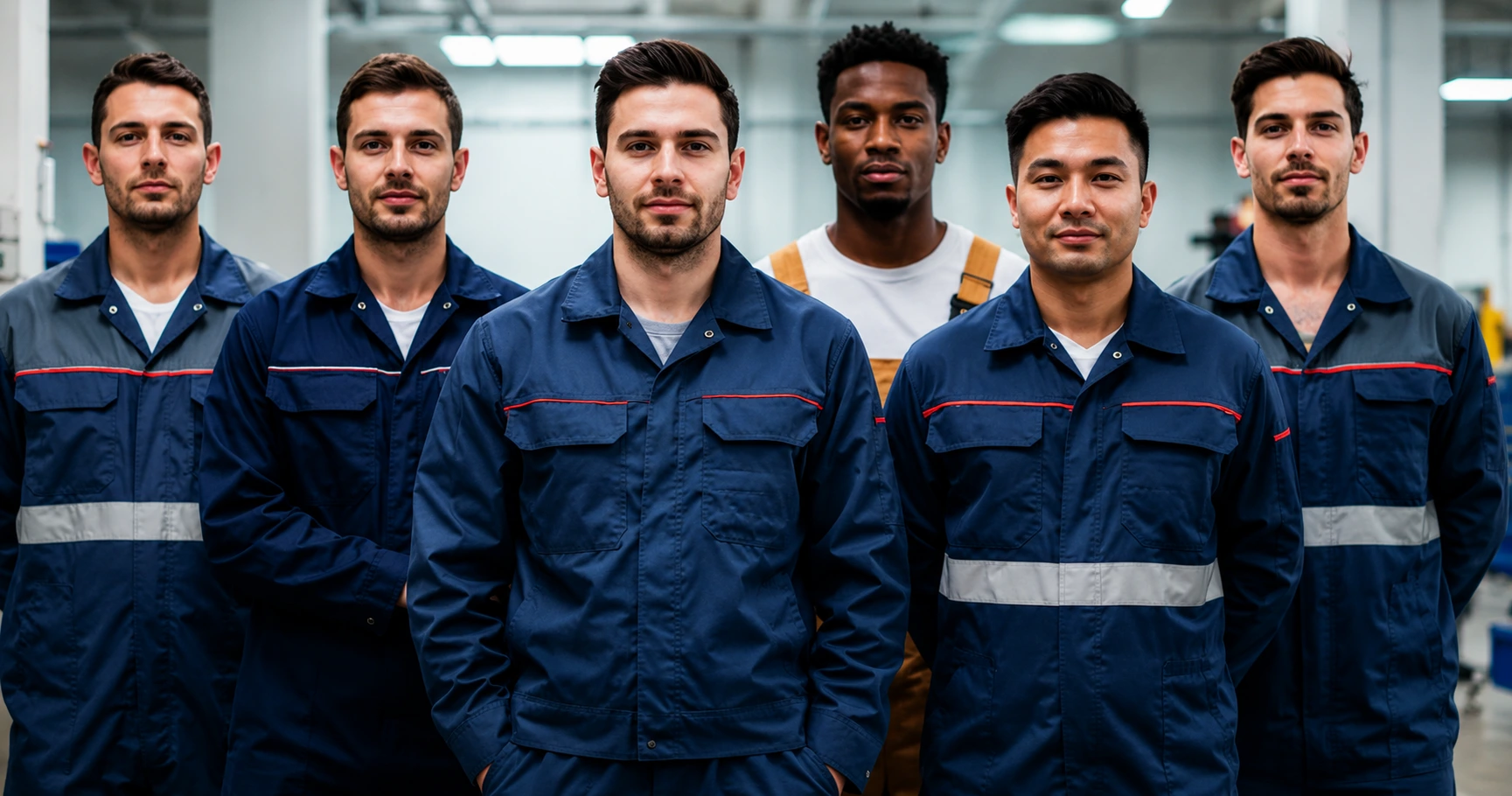
Types of Industrial Uniforms: Safety, Corporate & Specialized Workwear by a Manufacturer
Choosing the right uniform is more than just a style decision—it impacts safety, comfort, productivity, and brand identity. As an industrial uniform manufacturer, we understand that businesses today need uniforms that protect workers, reflect professionalism, and suit specialized job roles. This guide explains the types of industrial uniforms, including safety wear, corporate uniforms, and specialized workwear, to help you make informed decisions for your team.
Whether you operate in manufacturing, construction, hospitality, healthcare, or logistics, this blog will walk you through the purpose, benefits, materials, and ideal use cases of each uniform type.
Why Industrial Uniforms Matter in the Workplace
Uniforms play a critical role in modern industries. They are not just clothing—they are part of your operational system.
Key Benefits of Industrial Uniforms
-
Improve workplace safety
-
Enhance employee identity
-
Promote brand consistency
-
Increase team morale
-
Support regulatory compliance
-
Improve hygiene and cleanliness
-
Build customer trust
A professional industrial uniform manufacturer designs workwear that aligns with safety regulations, comfort needs, and business branding.
Understanding the Main Types of Industrial Uniforms
Industrial uniforms can be broadly divided into three major categories:
-
Safety Workwear
-
Corporate Uniforms
-
Specialized Workwear
Each serves a different purpose depending on job role, environment, and risk level.
1. Safety Workwear
Safety uniforms are designed to protect workers from physical, chemical, thermal, and environmental hazards. These uniforms are commonly used in factories, construction sites, oil & gas facilities, warehouses, and workshops.
Common Types of Safety Uniforms
a. Flame-Resistant (FR) Clothing
Protects workers from fire and high heat exposure.
b. High-Visibility (Hi-Vis) Uniforms
Used in roadwork, logistics, and night operations to improve visibility.
c. Chemical-Resistant Uniforms
Designed for labs, chemical plants, and pharmaceutical industries.
d. Anti-Static Uniforms
Prevents electrostatic discharge in sensitive environments.
e. Waterproof and Weatherproof Gear
Ideal for outdoor industries.
Key Features of Safety Workwear
-
Durable fabric
-
Reinforced stitching
-
Reflective strips
-
Breathable design
-
Flame and chemical resistance
-
Compliance with safety standards
A professional manufacturer ensures these features meet global and local safety regulations.
2. Corporate Uniforms
Corporate uniforms focus on professional appearance, comfort, and branding. They are widely used in offices, retail, hospitality, healthcare, and service industries.
Common Corporate Uniform Types
a. Office Wear
Formal shirts, trousers, blazers, and skirts.
b. Hospitality Uniforms
Chef coats, housekeeping attire, concierge outfits.
c. Healthcare Uniforms
Scrubs, lab coats, patient-care uniforms.
d. Retail Uniforms
Branded T-shirts, aprons, polo shirts.
Why Corporate Uniforms Matter
-
Builds brand identity
-
Enhances professionalism
-
Creates customer trust
-
Promotes team unity
-
Makes staff easily recognizable
An experienced industrial uniform manufacturer ensures that corporate uniforms combine aesthetics with comfort and durability.
3. Specialized Workwear
Specialized uniforms are designed for specific roles that demand unique functionality, tools, or protective features.
Examples of Specialized Workwear
a. Mechanic and Automotive Uniforms
Oil-resistant, tear-proof, breathable fabrics.
b. Food Industry Uniforms
Hygienic, stain-resistant, easy-to-clean materials.
c. Aviation and Airport Staff Uniforms
Formal, weather-resistant, functional.
d. Mining and Heavy Industry Gear
Heavy-duty, impact-resistant clothing.
e. Medical Protective Gear
PPE kits, isolation gowns, sterile clothing.
Why Specialized Workwear Is Important
-
Improves job efficiency
-
Enhances worker safety
-
Reduces fatigue
-
Supports compliance
-
Matches work conditions
Choosing the Right Industrial Uniform for Your Business
Not all uniforms suit all industries. Choosing the right one depends on several factors.
Key Factors to Consider
-
Work Environment – Indoor, outdoor, hazardous
-
Job Role – Physical, administrative, technical
-
Safety Requirements – Fire, chemical, electrical risks
-
Comfort – Breathability, weight, flexibility
-
Branding – Logo, colors, design
-
Budget – Long-term durability vs cost
A reliable manufacturer will assess these factors before recommending solutions.
Materials Used in Industrial Uniforms
Material choice affects comfort, durability, and safety.
Common Fabrics
Cotton
Breathable, soft, and comfortable.
Polyester
Durable, wrinkle-resistant, and long-lasting.
Cotton-Polyester Blends
Balanced comfort and durability.
Flame-Resistant Fabrics
Used in high-risk environments.
Waterproof Coated Fabrics
For rain-prone or wet environments.
Custom vs Standard Industrial Uniforms
Many businesses wonder whether to choose custom or standard uniforms.
Standard Uniforms
Pros:
-
Affordable
-
Fast delivery
-
Ready-made designs
Cons:
-
Limited branding
-
Generic fit
Custom Uniforms
Pros:
-
Tailored fit
-
Brand identity
-
Specific safety features
-
Color customization
-
Logo embroidery
Cons:
-
Higher cost
-
Longer production time
Most businesses working with a professional industrial uniform manufacturer prefer custom solutions for better branding and performance.
Why Work with a Professional Industrial Uniform Manufacturer?
Not all suppliers are the same. A specialized manufacturer offers value beyond basic clothing.
What a Manufacturer Provides
-
Industry expertise
-
Fabric knowledge
-
Safety compliance
-
Custom design
-
Bulk production
-
Quality assurance
-
After-sales support
This ensures long-term satisfaction and consistent uniform quality.
Quality Control in Industrial Uniform Production
High-quality uniforms go through strict quality checks.
Typical Quality Checks
-
Fabric strength testing
-
Stitch durability tests
-
Colorfastness testing
-
Shrinkage control
-
Comfort evaluation
-
Safety compliance checks
Sustainability in Industrial Uniform Manufacturing
Modern manufacturers are adopting eco-friendly practices.
Sustainable Practices
-
Organic cotton
-
Recycled polyester
-
Low-water dyeing
-
Reduced waste
-
Long-lasting designs
This helps businesses reduce their carbon footprint.
Maintenance Tips for Long-Lasting Uniforms
Proper care increases uniform lifespan.
-
Wash according to label instructions
-
Avoid harsh chemicals
-
Store properly
-
Repair small damages early
-
Replace worn-out uniforms
Future of Industrial Uniforms
Technology is shaping workwear design.
Emerging Trends
-
Smart fabrics
-
Temperature-regulating materials
-
RFID tracking
-
Anti-microbial coatings
-
Lightweight protective gear
Frequently Asked Questions (FAQs)
1. What does an industrial uniform manufacturer do?
They design, produce, and supply workwear tailored to industry needs.
2. Which industries need safety uniforms?
Construction, manufacturing, oil & gas, logistics, and mining.
3. Can I customize my company uniforms?
Yes, most manufacturers offer full customization.
4. How long does custom uniform production take?
Typically 2–6 weeks.
5. Are industrial uniforms washable?
Yes, but washing instructions vary by fabric.
6. What is the best fabric for hot climates?
Cotton blends and breathable fabrics.
7. Do manufacturers provide bulk discounts?
Yes, bulk orders usually come with cost benefits.
Final Thoughts
Understanding the types of industrial uniforms—from safety wear to corporate attire and specialized workwear—helps businesses create safer, more productive, and more professional workplaces. Working with a trusted industrial uniform manufacturer ensures that your uniforms are functional, compliant, comfortable, and aligned with your brand identity.
Choosing the right uniforms is an investment in your workforce and your company’s image.