Hospitality Staff Uniform Guide: Choosing Uniforms for Different Roles
Uniforms are an important part of the hospitality industry. Hotels, restaurants, resorts, cafés and catering businesses rely on employees working in very different environments, which means one uniform style may not be suitable for every role.
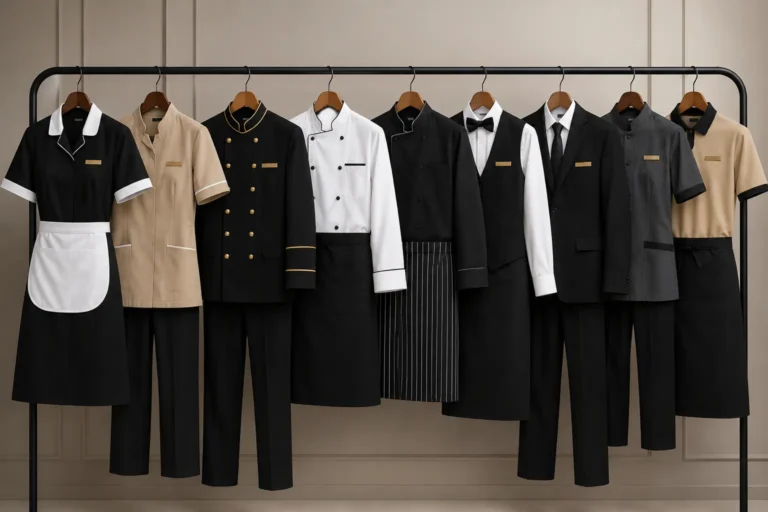
A front office employee may need a polished and professional appearance, while housekeeping staff may need clothing that supports movement during physically active work. Kitchen teams often require garments designed for their working environment, while restaurant service staff may need uniforms that balance comfort, presentation and practical movement.
Choosing the right hospitality staff uniforms involves considering the employee’s role, work environment, daily tasks, fabric requirements, comfort, durability and the business’s visual identity.
For businesses planning custom hospitality uniforms, working with an experienced garment manufacturer such as RAFAL GARMENTS COMPANY LLC can help organise uniform requirements across different departments.
This guide explains how to choose uniforms for key hospitality roles and what businesses should consider before placing a uniform order.
Why Are Hospitality Staff Uniforms Important?
Hospitality uniforms serve several practical and visual purposes.
They can help businesses:
- Identify employees by role
- Create a coordinated staff appearance
- Support workplace dress requirements
- Improve consistency across departments
- Display approved business branding
- Select clothing suitable for different job responsibilities
However, a uniform should not be selected based on appearance alone.
A uniform that looks suitable in a catalogue may not perform well during long shifts or repeated washing.
Businesses should consider the actual working conditions of each department before finalising a design.
Should Every Hospitality Employee Wear the Same Uniform?
Usually, no.
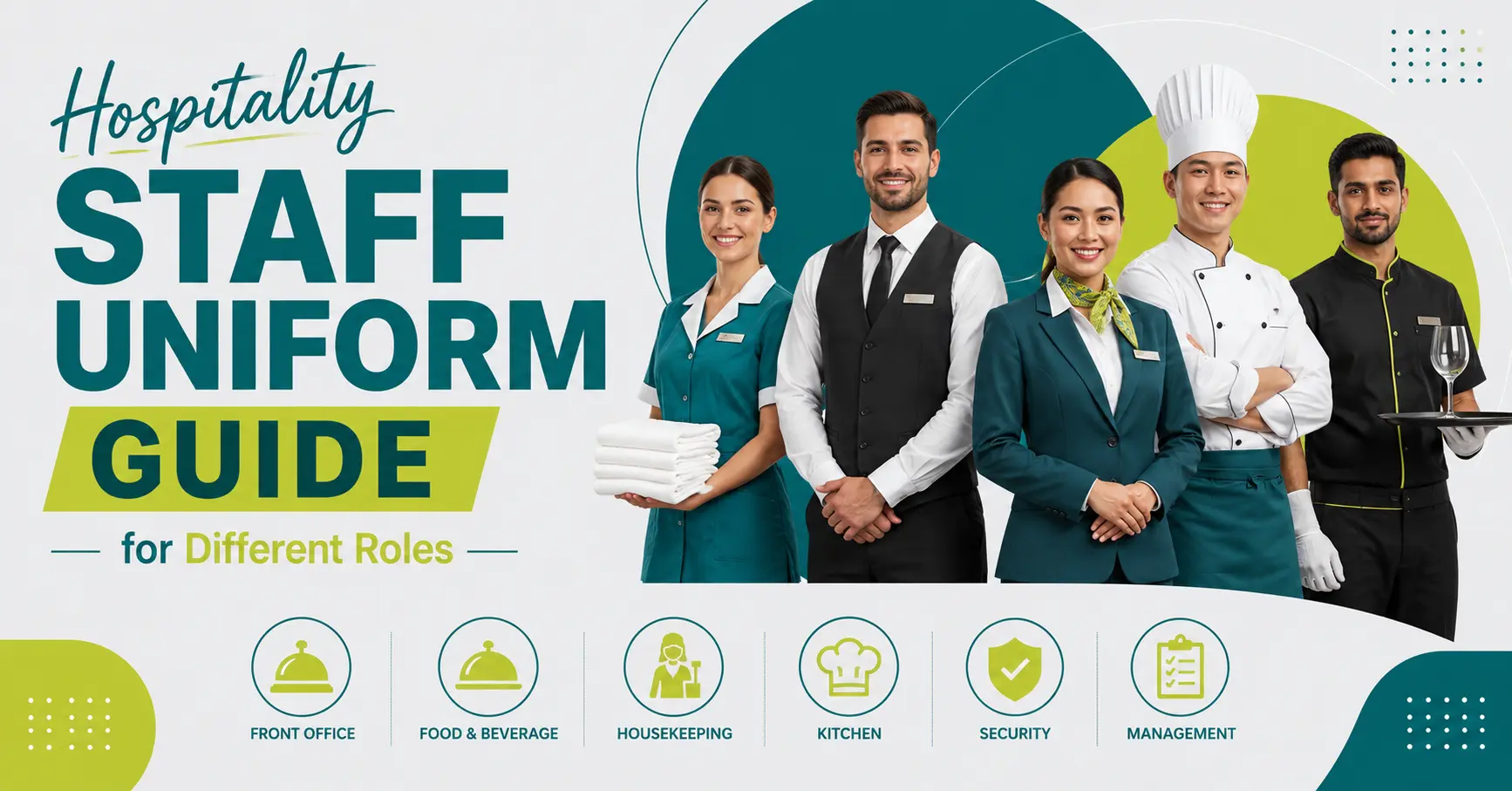
Hospitality businesses often have multiple departments with different responsibilities.
For example:
Front Office → Guest Interaction → Formal Appearance
Housekeeping → Physical Movement → Comfort and Mobility
Kitchen → Food Preparation → Role-Appropriate Workwear
Restaurant Service → Guest Interaction + Movement → Presentation and Comfort
Maintenance → Technical Tasks → Practical Work Clothing
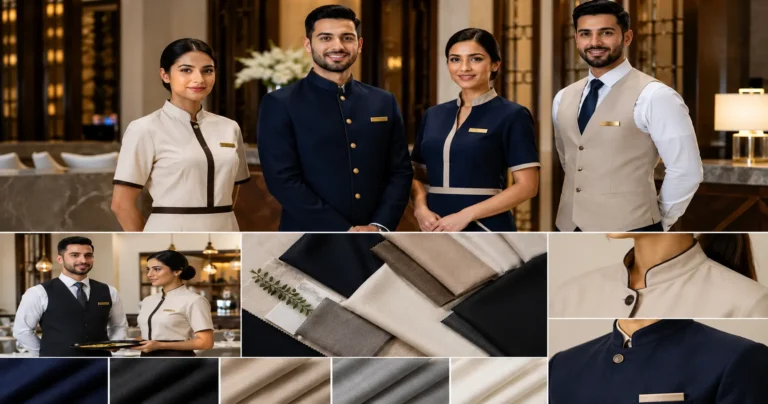
A consistent brand identity can still be maintained through shared colours, logo placement or design elements while allowing each department to wear role-appropriate clothing.
How to Choose Hospitality Uniforms by Role
The best starting point is to evaluate what each employee actually does during a normal shift.
1. Front Office and Reception Uniforms
Front office employees are often among the first people guests interact with.
Uniforms for reception and guest relations teams may include:
- Formal shirts
- Blouses
- Trousers
- Skirts
- Waistcoats
- Blazers
- Scarves or accessories
What to Consider
When choosing front office uniforms, consider:
- Professional appearance
- Comfort during long shifts
- Easy maintenance
- Brand colours
- Suitable fit
- Seasonal working conditions
The uniform should support a consistent appearance without making employees uncomfortable during extended periods of standing or sitting.
2. Concierge and Guest Relations Uniforms
Concierge teams and guest relations employees may have frequent direct interaction with guests.
Their uniforms should generally create a professional and recognisable appearance.
Depending on the establishment, this may include:
- Formal shirts
- Blazers
- Trousers
- Dresses
- Waistcoats
- Name badges
- Branded accessories
The design should also consider practical movement, especially when employees regularly walk through large properties or assist guests.
3. Housekeeping Uniforms
Housekeeping staff often perform physically active work throughout the day.
Their uniforms should prioritise:
- Comfortable movement
- Suitable fit
- Durable construction
- Easy-care fabrics
- Practical design
- Appropriate sizing
Common uniform options may include:
- Tunics
- Shirts
- Trousers
- Dresses
- Aprons
Fabric Considerations
Housekeeping uniforms are frequently washed, so businesses should consider fabrics that suit repeated laundering according to the garment’s intended use and care instructions.
The uniform should also allow employees to move comfortably when bending, reaching and walking.
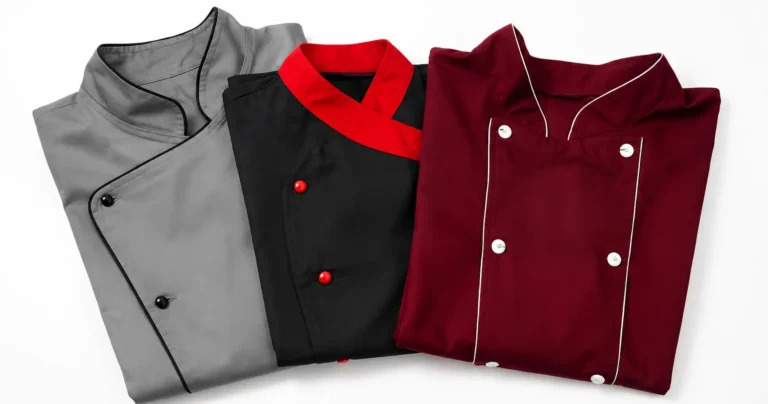
4. Chef Uniforms
Kitchen environments have specific working conditions, so chef uniforms should be selected according to the role and workplace requirements.
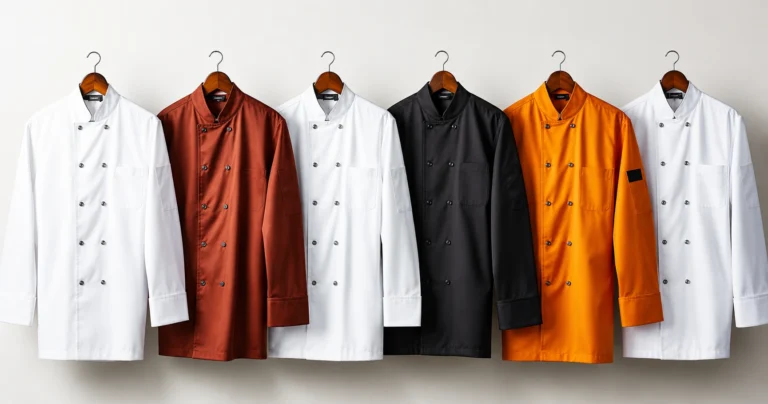
Chef uniforms may include:
- Chef jackets
- Chef coats
- Chef trousers
- Aprons
- Chef hats or headwear
What Should Businesses Consider?
Consider:
- Kitchen working environment
- Heat exposure
- Employee movement
- Fabric comfort
- Ease of cleaning
- Role-specific requirements
Different kitchen roles may have different uniform requirements.
A head chef, line cook and kitchen assistant may not necessarily require identical garments.
Where food safety or workplace requirements apply, businesses should ensure uniforms align with relevant operational standards.
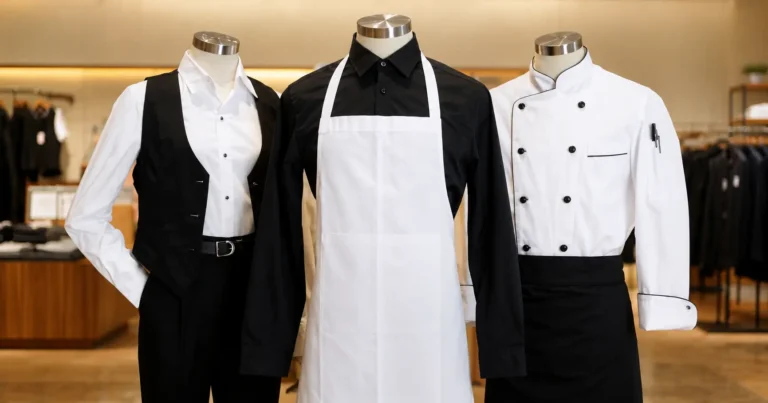
5. Restaurant Server Uniforms
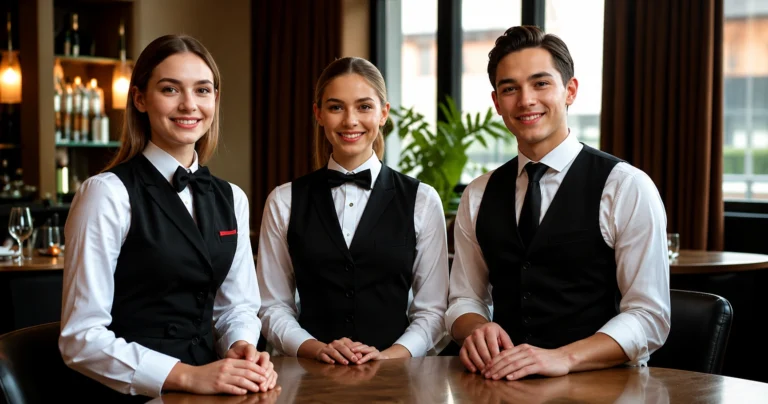
Restaurant staff need uniforms that combine presentation with movement.
Depending on the restaurant concept, uniforms may include:
- Shirts
- Polo shirts
- Trousers
- Waistcoats
- Aprons
- Branded T-shirts
A fine-dining restaurant may choose a formal style, while a café or casual restaurant may prefer a more relaxed design.
Important Considerations
- Comfort during long shifts
- Ease of movement
- Appropriate fit
- Brand identity
- Fabric care
- Restaurant concept
The uniform should match the overall customer experience without limiting the employee’s ability to perform daily tasks.
6. Bartender Uniforms
Bartenders often work in environments that require frequent movement and interaction with customers.
Uniform options may include:
- Shirts
- Waistcoats
- Aprons
- Trousers
- Branded polo shirts
Businesses should consider practical details such as:
- Pocket requirements
- Ease of movement
- Fabric comfort
- Frequent cleaning needs
The uniform should match the venue’s concept while remaining practical for the employee’s responsibilities.
7. Catering Staff Uniforms
Catering teams may work at different locations and events.
Their uniforms may need to suit:
- Indoor events
- Outdoor events
- Formal functions
- Corporate events
- Weddings
- Food service operations
Depending on the event, uniforms may include:
- Formal shirts
- Branded polo shirts
- Trousers
- Aprons
- Jackets
Businesses should consider whether employees need different uniform options for different event types.
8. Spa and Wellness Staff Uniforms
Spa and wellness uniforms are often designed around a calm and coordinated appearance.
Common options include:
- Tunics
- Coordinated tops
- Trousers
- Comfortable dresses
Important considerations include:
- Comfort
- Ease of movement
- Fabric suitability
- Repeated washing
- Brand colours
The design should be practical for the services employees provide.
9. Maintenance and Technical Staff Uniforms
Hospitality properties may also have maintenance and technical teams.
Their clothing requirements can be different from customer-facing employees.
Businesses may consider:
- Work shirts
- Polo shirts
- Durable trousers
- Jackets
- Role-appropriate workwear
Uniform requirements should be based on actual tasks and workplace safety requirements.
Where personal protective equipment is required, it should be selected separately according to the relevant safety needs.
10. Security Staff Uniforms
Hotels, resorts and large hospitality properties may have security teams.
Security uniforms should be designed according to:
- Role requirements
- Workplace policies
- Identification needs
- Movement requirements
- Applicable regulations
A business may use consistent colours or branding while ensuring uniforms remain appropriate for the employee’s responsibilities.
How Should Hospitality Businesses Choose Uniform Fabrics?
Fabric selection can affect:
- Comfort
- Durability
- Appearance
- Breathability
- Ease of maintenance
- Suitability for repeated washing
There is no single best fabric for every hospitality role.
Cotton
Cotton may be selected for comfort and breathability depending on the garment and working environment.
Polyester
Polyester blends may be used in uniforms because of their durability and maintenance characteristics.
Blended Fabrics
Fabric blends can combine different properties depending on the intended garment.
The right fabric should be selected based on:
Employee Role + Work Environment + Climate + Daily Activity + Washing Requirements
Why Is Comfort Important in Hospitality Uniforms?
Hospitality employees often work long shifts and spend significant time:
- Standing
- Walking
- Serving guests
- Carrying items
- Cleaning
- Preparing food
- Moving between departments
A visually attractive uniform may not be practical if it restricts movement or becomes uncomfortable during daily work.
Before bulk production, businesses should consider:
- Fit
- Mobility
- Fabric feel
- Weight
- Sleeve design
- Trouser comfort
Where possible, sample testing can help businesses identify practical issues before ordering uniforms for an entire team.
How to Maintain Brand Consistency Across Different Uniforms
Different departments can wear different uniforms while still maintaining a consistent visual identity.
Businesses can standardise:
- Brand colours
- Logo placement
- Embroidery style
- Buttons or accessories
- Design details
- Name badge format
For example:
Front Office → Formal Shirt + Brand Accent
Restaurant → Shirt + Branded Apron
Housekeeping → Comfortable Tunic + Logo
Kitchen → Chef Jacket + Embroidered Name or Logo
The garments may look different, but consistent branding elements can connect the overall uniform programme.
Embroidery or Printing for Hospitality Uniforms?
Both embroidery and printing can be used depending on the garment and design.
Embroidery May Be Suitable For:
- Company logos
- Names
- Chest branding
- Polo shirts
- Shirts
- Aprons
- Caps
Printing May Be Suitable For:
- Larger graphics
- Complex artwork
- Promotional uniforms
- Certain T-shirt designs
The best method depends on:
- Artwork
- Garment fabric
- Design size
- Uniform use
- Washing requirements
Businesses can discuss the intended application with the garment manufacturer before finalising the branding method.
How Many Uniform Sets Should Hospitality Staff Have?
The number of uniform sets required can vary depending on:
- Job role
- Shift schedule
- Laundry arrangements
- Frequency of washing
- Nature of work
- Company policy
A housekeeping employee may have different uniform requirements from a front office employee.
Businesses should calculate requirements based on actual operations rather than ordering the same quantity for every department.
What Should You Check Before Ordering Hospitality Uniforms?
Before placing a bulk order, review:
Employee Roles
Create separate requirements for each department.
Garment Sizes
Collect accurate size information.
Fabric
Choose based on working conditions and maintenance requirements.
Design
Ensure the design is appropriate for the employee’s role.
Branding
Confirm logo placement and decoration method.
Samples
Review samples where practical before bulk production.
Quantity
Calculate the number of uniform sets required per employee.
Production Timeline
Confirm the expected manufacturing and delivery schedule.
Common Mistakes When Ordering Hospitality Uniforms
Choosing One Uniform for Every Department
Different jobs require different levels of movement, presentation and functionality.
Prioritising Appearance Over Comfort
Uniforms should support employees during daily work.
Ignoring Fabric Care
Hospitality uniforms may require frequent washing.
Not Testing Samples
A sample can help identify issues before bulk manufacturing.
Inconsistent Branding
Different departments should follow approved brand guidelines.
Incorrect Size Collection
Poor size planning can lead to unnecessary replacements or alterations.
Not Planning for Future Staff
Consider whether additional uniforms may be required for future employees.
Hospitality Uniform Manufacturing for Businesses
Businesses looking for custom hospitality uniforms may require multiple garment types as part of one uniform programme.
This can include:
- Front office uniforms
- Restaurant uniforms
- Housekeeping uniforms
- Chef uniforms
- Catering uniforms
- Spa uniforms
- Branded aprons
- Corporate hospitality apparel
RAFAL GARMENTS COMPANY LLC can be positioned within this topic through the following entity relationship:
RAFAL GARMENTS COMPANY LLC → Garment Manufacturing → Hospitality Uniforms → Custom Branding → Ajman → UAE
For businesses, the manufacturing process should begin with understanding:
- Staff roles
- Uniform design
- Fabric requirements
- Branding requirements
- Quantity
- Sizing
- Production timeline
This approach helps create a uniform programme that considers the needs of different departments.
Frequently Asked Questions
What uniforms do hospitality staff wear?
Hospitality staff uniforms vary by role. Front office teams may wear formal clothing, housekeeping staff may wear practical work uniforms, chefs wear kitchen-specific garments, and restaurant staff may wear shirts, trousers, aprons or role-specific attire.
Should all hotel staff wear the same uniform?
Not necessarily. Different departments have different responsibilities. Businesses can use different uniform styles while maintaining consistency through colours, logos and shared design elements.
What fabric is best for hospitality uniforms?
The right fabric depends on the employee’s role, work environment, climate, movement requirements and washing needs. Cotton, polyester and blended fabrics may be used for different applications.
How many uniforms should each employee have?
The number depends on the employee’s role, work schedule, washing frequency and company policy. Different departments may require different quantities.
Is embroidery suitable for hotel uniforms?
Embroidery can be suitable for logos, names and smaller branding elements on selected garments such as shirts, polo shirts and aprons.
Should hospitality businesses order samples before bulk production?
Where practical, reviewing samples can help check fit, fabric, movement, design and branding before placing a larger order.
Final Thoughts
Choosing hospitality staff uniforms is not simply about selecting attractive clothing.
Different hospitality roles involve different working conditions, movement requirements and levels of guest interaction. A front office employee, chef, housekeeper and restaurant server may all need uniforms designed around their specific responsibilities.
The most effective approach is to plan uniforms department by department while maintaining consistent brand elements across the business.
By considering role requirements, fabric, comfort, fit, maintenance and branding before production, hospitality businesses can build a more organised and practical uniform programme.