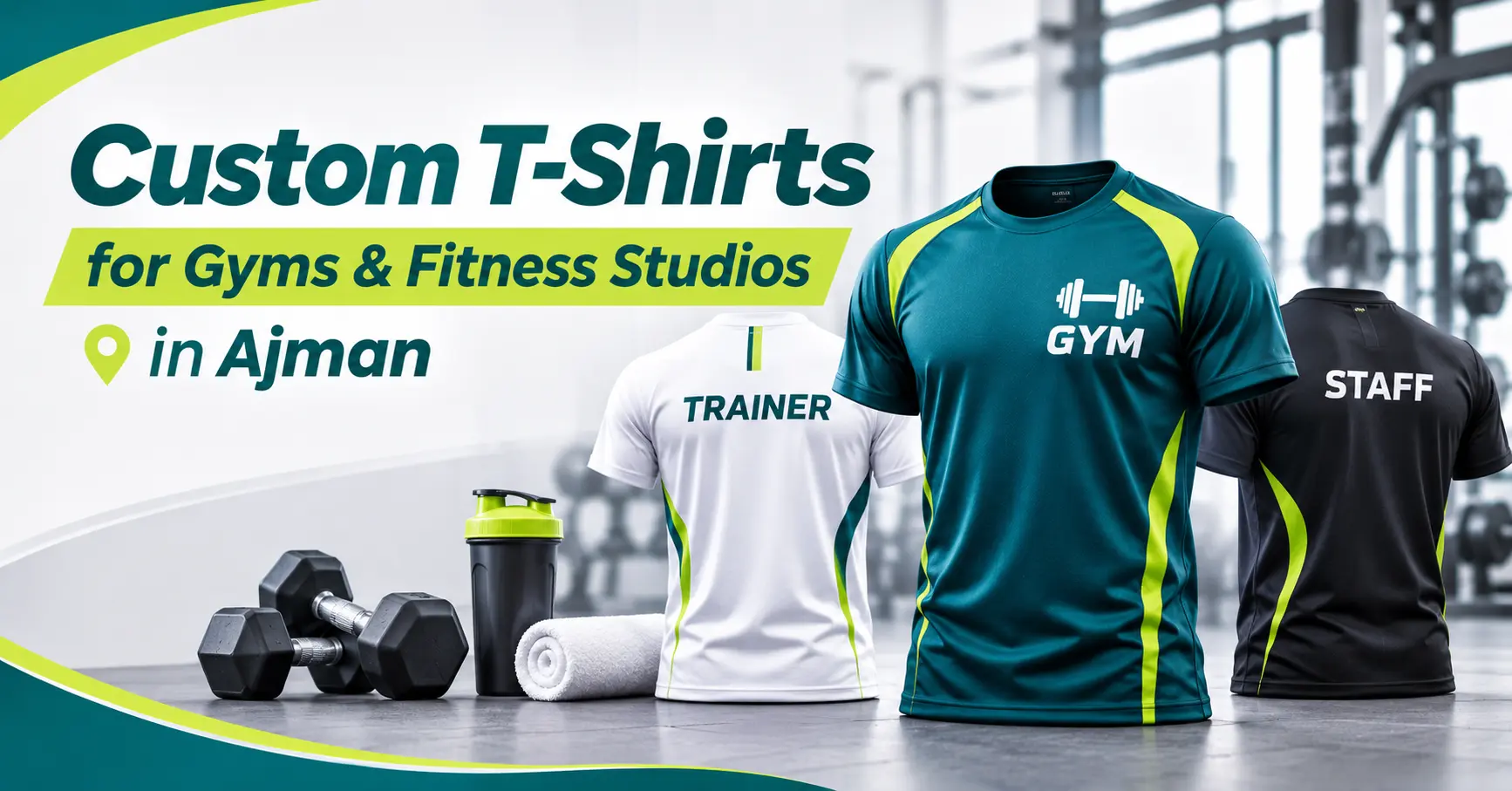
Custom T-Shirts for Gyms & Fitness Studios in Ajman: Staff, Trainer & Member Apparel
Choosing custom T-shirts for gyms in Ajman involves more than adding a logo to a standard garment. Fitness centres and studios need different apparel for reception staff, personal trainers, group-class instructors, fitness teams and members. Each group may have different requirements for fabric, fit, movement, appearance and branding. Businesses looking for custom T-shirt printing and manufacturing in Ajman can explore different garment styles, printing methods and branding options to create apparel that reflects their gym’s identity.
For example, a personal trainer may prefer a lightweight T-shirt for workout sessions, while reception employees may need branded polo shirts that create a coordinated professional appearance. Gym members may have different preferences when purchasing merchandise or receiving T-shirts for fitness programmes and events.
The best approach is to select garments according to their intended use instead of ordering one design for everyone associated with the gym.
This guide explains how gym owners, fitness studio managers and sports business operators in Ajman can choose suitable fabrics, plan designs, compare printing methods and organise custom apparel orders for staff, trainers and members.
Quick Answer: What Should Gyms Consider Before Ordering Custom T-Shirts?
Before placing an order, consider these important factors:
-
Purpose: Separate requirements for staff, personal trainers, instructors and members.
-
Fabric: Compare cotton, poly-cotton, mesh and dry-fit options.
-
Fit: Choose suitable cuts for everyday wear and physical activity.
-
Branding: Decide between screen printing, DTF, heat transfer, sublimation and embroidery.
-
Design: Plan logo placement, colours, artwork and garment styles.
-
Sizing: Collect employee and member size requirements accurately.
-
Quantity: Estimate the number of garments required for each group.
-
Reordering: Maintain approved samples and specifications for future orders.
A well-planned apparel order helps gyms maintain a consistent brand identity while selecting garments that suit different activities.
Why Do Gyms and Fitness Studios Need Custom T-Shirts?
Custom apparel can serve several purposes in a fitness business. It can help distinguish employees from members, create a consistent visual identity and provide branded clothing for fitness activities.
1. Create a Consistent Gym Identity
A coordinated T-shirt design featuring the gym’s name, logo and brand colours can give employees a consistent appearance.
This is particularly useful for fitness centres with multiple trainers, reception employees and group-class instructors.
2. Make Staff and Trainers Easily Identifiable
In a busy gym, members may need to identify personal trainers, fitness instructors or reception staff quickly.
Different T-shirt colours, logo placements or garment styles can help distinguish roles.
3. Support Fitness Events and Group Activities
Gyms frequently organise activities such as:
-
Fitness challenges.
-
Group workout sessions.
-
Running clubs.
-
Personal training programmes.
-
Fitness competitions.
-
Member appreciation events.
-
Outdoor training sessions.
Custom T-shirts can provide coordinated apparel for these activities.
4. Build a Branded Merchandise Collection
Some gyms create branded T-shirts for members to purchase or receive as part of membership packages.
Different designs, colours and garment styles can help create a merchandise collection that reflects the studio’s identity.
5. Support Promotional Campaigns
Custom T-shirts can also be included in selected membership offers, promotional campaigns, fitness programmes and event giveaways.
This provides another opportunity for the gym’s brand to be seen outside its premises.
What Types of Custom T-Shirts Do Gyms Need?
Not every T-shirt order should follow the same design. A fitness business may need separate clothing for staff operations, training activities and member merchandise.
1. Gym Staff T-Shirts
Reception employees, membership consultants and general gym staff may need coordinated casual T-shirts or polo shirts.
Consider:
-
Comfortable fabric.
-
Professional appearance.
-
Consistent company colours.
-
Clearly positioned gym logo.
-
Practical fit.
-
Easy maintenance.
Polo shirts may suit front-desk and customer-facing employees, while round-neck T-shirts may work better for general staff activities.
2. Personal Trainer T-Shirts
Personal trainers spend time demonstrating exercises, assisting members and moving around training areas.
Their clothing should allow comfortable movement during physical activities.
Consider:
-
Lightweight fabric options.
-
Suitable fit and flexibility.
-
Comfortable sleeves.
-
Appropriate fabric construction.
-
Moisture-management properties where required.
-
Branding that remains visible during movement.
Dry-fit or suitable performance fabrics may be considered for trainers who conduct frequent workout sessions. Check the fabric specifications rather than assuming all synthetic T-shirts offer the same performance.
3. Group Fitness Instructor T-Shirts
Group fitness instructors may conduct sessions involving continuous movement, demonstrations and interaction with participants.
Depending on the training programme, they may benefit from:
-
Lightweight sportswear.
-
Flexible garment construction.
-
Comfortable fit.
-
Suitable sleeve design.
-
Clearly visible gym branding.
Different colours can also help identify instructors across different classes or programmes.
4. Gym Member T-Shirts
Member apparel serves a different purpose from staff uniforms.
Gyms may create custom T-shirts for:
-
Member welcome packages.
-
Fitness challenges.
-
Group workout events.
-
Gym merchandise.
-
Personal training programmes.
-
Running clubs.
-
Promotional campaigns.
Member T-shirts can feature the gym logo, motivational graphics, programme names or event artwork.
For merchandise, consider garment appearance, fabric feel, design and the preferences of the intended audience.
5. Sports and Fitness Event T-Shirts
Special events may require different T-shirt designs from regular staff apparel.
For example, a gym organising a fitness competition may need event-specific shirts featuring:
-
Event name.
-
Gym branding.
-
Sponsor logos.
-
Participant names or numbers, where required.
-
Event date or theme.
For larger events, ordering quantities by participant category and size can simplify distribution.
How to Choose the Right Fabric for Gym T-Shirts
Fabric selection is one of the most important decisions when ordering fitness apparel.
A fabric that works well for a reception employee may not be the most suitable option for a personal trainer conducting several workout sessions.
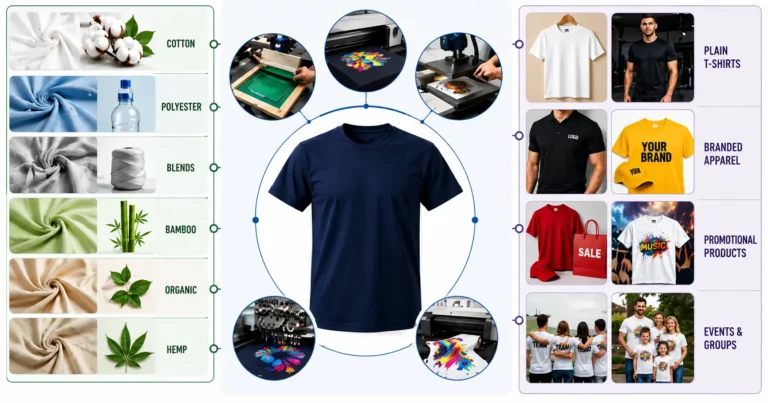
Rafal’s casual and sportswear collection in Ajman lists cotton, poly-cotton, mesh and dry-fit T-shirt options, allowing businesses to consider different garment requirements.
Here are some commonly considered fabric options.
1. Cotton T-Shirts
Cotton is commonly selected for casual apparel, everyday staff clothing and promotional T-shirts.
Potential advantages:
-
Soft feel.
-
Comfortable for everyday wear.
-
Suitable for different printed designs.
-
Available in different fabric weights.
-
Versatile for casual apparel.
Considerations:
-
Can retain moisture during intense activity.
-
May wrinkle.
-
Shrinkage and colour retention depend on fabric construction and care.
Suitable applications: Reception staff, gym merchandise, promotional T-shirts and member welcome kits.
2. Polyester-Cotton T-Shirts
Poly-cotton combines cotton and polyester fibres.
Depending on the blend, it can offer a balance of comfort, easy maintenance and practical everyday wear.
Potential advantages:
-
Different fabric-weight options.
-
Practical for regular use.
-
Suitable for staff apparel.
-
Available in different styles and colours.
Suitable applications: Gym reception staff, membership teams, everyday employee T-shirts and promotional apparel.
The actual performance depends on the cotton-polyester ratio and fabric construction.
3. Mesh Fabric T-Shirts
Mesh fabrics feature an open or textured construction designed to support airflow, depending on the design.
They may be considered for selected sportswear applications.
Potential advantages:
-
Lightweight options.
-
Open fabric construction.
-
Sportswear appearance.
-
Different mesh structures available.
Suitable applications: Fitness teams, group activities, sports events and selected workout apparel.
4. Dry-Fit T-Shirts
Dry-fit describes performance-oriented fabrics intended to manage moisture and support comfort during physical activity.
These T-shirts are often considered for fitness environments where employees or members engage in active sessions.
Potential advantages:
-
Lightweight options.
-
Moisture-management properties, depending on construction.
-
Suitable designs for exercise.
-
Different fits and styles.
Suitable applications: Personal trainers, fitness instructors, group workout teams, running clubs and fitness events.
Before purchasing, check the fabric composition and manufacturer’s performance information. Not every polyester T-shirt provides the same moisture-management performance.
Fabric Comparison for Gym Apparel
| Fabric | Main Characteristics | Suitable Applications |
|---|---|---|
| Cotton | Soft feel and everyday comfort | Staff and merchandise |
| Poly-cotton | Practical everyday fabric option | Reception and general staff |
| Mesh | Open fabric construction | Selected sportswear |
| Dry-fit | Performance-oriented moisture management | Trainers and workout apparel |
My recommendation: Consider separate fabric options for staff uniforms and active training apparel instead of selecting one material for the entire gym.
How to Choose the Right T-Shirt Fit for Gym Employees and Members
Fit is just as important as fabric when selecting custom fitness apparel.
A T-shirt that looks good in a product photograph may not provide the same comfort for employees who wear it throughout a working shift or members who exercise in it.
Regular Fit
Regular-fit T-shirts offer a conventional shape and can be suitable for general staff uniforms, casual merchandise and everyday use.
Slim Fit
Slim-fit designs provide a closer silhouette. They may suit selected promotional or lifestyle apparel, depending on the intended audience’s preferences.
Relaxed Fit
Relaxed-fit T-shirts offer additional room around the body. They may be preferred for certain workout activities and casual merchandise.
Athletic Fit
Athletic-fit styles are designed around a more fitted sportswear silhouette. Their suitability depends on the garment pattern, fabric stretch and individual preference.
Size Planning for Bulk Orders
Before production, prepare a size distribution covering the required range.
For example:
| Size | Trainers | Staff | Member Merchandise |
|---|---|---|---|
| S | 5 | 4 | 10 |
| M | 10 | 8 | 20 |
| L | 12 | 10 | 25 |
| XL | 8 | 6 | 15 |
| XXL | 5 | 2 | 10 |
These quantities are illustrative. Actual requirements should be collected from employee measurements, previous merchandise sales or expected event participation.
For member merchandise, maintain a separate size distribution from staff uniforms wherever possible.
Which Branding Method Is Best for Custom Gym T-Shirts?
Once the garment and fabric have been selected, the next decision is how to apply the gym’s branding.
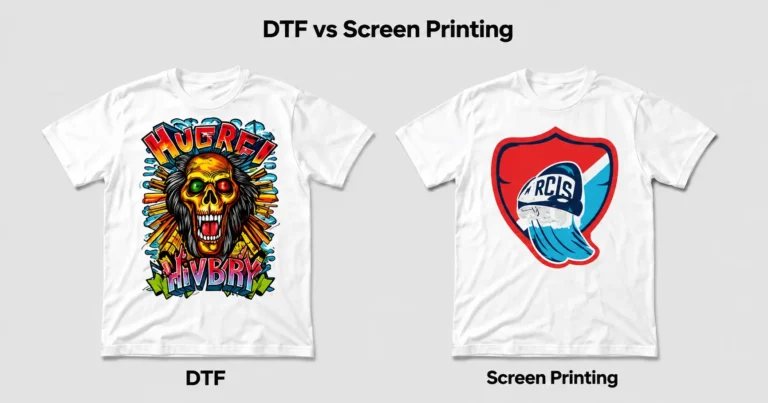
Common options include screen printing, DTF printing, heat transfer, sublimation and embroidery.
The correct method depends on the artwork, fabric, order quantity and intended use.
1. Screen Printing
Screen printing transfers ink onto the garment through a prepared screen.
It is commonly considered for bulk T-shirt orders featuring simple or bold graphics.
Potential advantages:
-
Suitable for larger quantities.
-
Works well for suitable bold designs.
-
Multiple garment colours can be produced with appropriate setup.
-
Practical for repeat promotional and team apparel.
Suitable applications: Gym staff T-shirts, fitness event shirts, member merchandise and group workout apparel.
2. DTF Printing
Direct-to-Film (DTF) printing creates a design on a transfer film, which is then applied to the garment using heat and pressure.
It can be useful for detailed logos and multicolour artwork.
Potential advantages:
-
Supports detailed graphics.
-
Suitable for different design requirements.
-
Useful for smaller custom batches.
-
Allows branding on suitable garment materials.
Suitable applications: Trainer T-shirts, gym merchandise, promotional apparel and multicolour logo designs.
3. Heat Transfer Printing
Heat transfer applies a prepared design onto fabric using heat.
It may be considered for individual names, numbers and selected custom graphics.
Suitable applications:
-
Personalised trainer apparel.
-
Fitness event shirts.
-
Team names and numbers.
-
Selected member T-shirts.
4. Sublimation Printing
Sublimation printing transfers specialised ink into suitable synthetic fabric, commonly polyester.
It can support full-colour and all-over garment designs.
Potential advantages:
-
Suitable for full-coverage graphics.
-
Supports multicolour sports designs.
-
Can create a smooth print appearance on suitable fabrics.
-
Useful for coordinated sportswear designs.
Suitable applications: Fitness team apparel, sports jerseys, competition T-shirts and custom performance-style garments.
5. Logo Embroidery
Embroidery creates a design by stitching thread into the fabric.
It may be appropriate for polo shirts, staff apparel and selected outerwear.
Potential advantages:
-
Textured finish.
-
Suitable for selected company logos.
-
Works well with certain uniform styles.
-
Can support a consistent staff appearance.
However, embroidery may not be the ideal option for every lightweight stretch or performance fabric. A sample should be reviewed to confirm its suitability.
Rafal’s garment printing services list screen printing, digital printing, heat transfer and sublimation options. Its page also identifies gyms among the business categories it serves.
Rafal also offers custom embroidery services for branded apparel.
Printing vs Embroidery: Which Should Gyms Choose?
| Requirement | Suitable Options |
|---|---|
| Large staff T-shirt quantities | Screen printing |
| Detailed multicolour logos | DTF or digital printing |
| Individual names or numbers | Heat transfer |
| Full-colour sportswear designs | Sublimation on suitable fabrics |
| Polo shirt branding | Embroidery or printing |
| Member merchandise | Screen printing or DTF |
There is no single best method for every gym T-shirt. The garment material, design and order quantity should determine the final choice.
How Should Gyms Design Their Custom T-Shirts?
A good gym T-shirt design should balance brand identity, readability and practical wear.
It should look suitable during everyday gym operations while representing the business outside the fitness centre.
1. Use Consistent Brand Colours
Select colours from the gym’s existing branding guidelines.
For example, if the gym uses black, red and white, those colours can guide staff apparel and member merchandise designs.
2. Keep the Logo Clearly Visible
Common logo placements include:
-
Left chest.
-
Centre chest.
-
Upper back.
-
Sleeve.
-
Full-back graphic.
The appropriate placement depends on the garment and intended appearance.
3. Consider the Back Design
The back of a gym T-shirt can provide space for:
-
Gym name.
-
Website.
-
Social media handle.
-
Fitness slogan.
-
Event branding.
-
Trainer or team identification.
However, excessive design elements can make the shirt look crowded.
4. Choose Readable Typography
Motivational phrases and fitness-related messages can be used on member merchandise.
Select fonts that remain readable when printed at the actual garment size.
5. Keep Staff and Member Designs Connected
Staff uniforms and merchandise can use the same core colour palette while having different designs.
For example:
-
Staff: Smaller logo on the chest.
-
Trainers: Gym logo with trainer identification.
-
Members: Larger graphic or creative brand artwork.
-
Events: Campaign-specific artwork.
This creates a consistent brand identity without making every T-shirt identical.
How to Plan Bulk Custom T-Shirt Orders for Gyms in Ajman
Ordering T-shirts for a gym requires proper planning, particularly when staff uniforms, trainer apparel and member merchandise are included in one order.
A gym ordering 30 staff T-shirts may have very different requirements from a fitness studio preparing 300 shirts for a promotional campaign.
A structured approach helps procurement teams avoid incorrect quantities and repeated changes.
Step 1: Identify the Purpose of Each Order
Separate requirements into categories:
-
Reception and administrative staff.
-
Personal trainers.
-
Fitness instructors.
-
Gym members.
-
Event participants.
-
Promotional merchandise.
This makes it easier to choose the correct fabric, fit and branding method.
Step 2: Confirm Garment Styles
Choose the appropriate style for each group.
For example:
-
Polo shirts for reception employees.
-
Dry-fit T-shirts for personal trainers.
-
Mesh sportswear for selected team activities.
-
Cotton T-shirts for merchandise.
Step 3: Finalise the Design
Prepare the gym logo, colour references, artwork, placement and garment specifications.
Step 4: Review Fabric Samples
A sample allows the gym to assess fabric feel, garment fit, colour and overall appearance before approving the full order.
Step 5: Confirm Employee Sizes
Collect size information from staff and trainers.
For member merchandise, use previous sales data or expected event participation to estimate quantities.
Step 6: Select the Printing or Embroidery Method
Match the branding method to the garment, artwork and required quantity.
Step 7: Approve the Final Sample
Check the finished logo, dimensions, placement, colour and overall garment appearance before bulk production.
Step 8: Plan Future Reorders
Save the approved garment specifications, size chart and artwork.
This makes future orders easier to coordinate when new trainers join, additional staff are hired or merchandise stock needs replenishment.
What Should Gym Owners Check Before Choosing a T-Shirt Manufacturer in Ajman?
Before selecting a supplier, gym owners should consider more than the advertised price.
A suitable manufacturer should understand both garment production and the branding requirements of fitness businesses.
Fabric Options
Does the manufacturer offer cotton, poly-cotton, mesh and dry-fit T-shirt options?
Customisation
Can garment designs be adjusted according to different staff and member requirements?
Printing and Embroidery
Are screen printing, digital printing, heat transfer, sublimation and embroidery available?
Size Availability
Can the manufacturer provide the required sizes for employees, trainers and merchandise orders?
Sample Approval
Can a sample be reviewed before bulk production?
Production Capacity
Can the supplier manage the required order quantity and any future reorders?
Delivery Planning
Can the order be coordinated according to the gym’s opening, campaign or event schedule?
Rafal Garments Company LLC’s T-shirt manufacturing page describes custom shirts for businesses, teams, events and promotional requirements. Its printing services page specifically includes gyms among the business categories it serves.
Custom Corporate T-Shirt Printing+1
How Rafal Garments Supports Custom Gym T-Shirts in Ajman
Rafal Garments Company LLC offers custom T-shirt printing and manufacturing in Ajman for businesses, teams, events and promotional requirements.
Its available apparel options include cotton T-shirts, poly-cotton T-shirts, mesh T-shirts, dry-fit T-shirts and other sportswear styles.
Custom Corporate T-Shirt Printing+1
These options can be considered for different fitness business requirements.
Gym Staff Apparel: Branded T-shirts and polo shirts for reception and operational employees.
Trainer Clothing: Suitable sportswear options for personal trainers and fitness instructors.
Fitness Team Apparel: Coordinated T-shirts and sportswear for group training programmes and activities.
Member Merchandise: Custom T-shirts for gym members and promotional campaigns.
Event Apparel: Branded T-shirts and sports jerseys for fitness events and competitions.
For branding, Rafal’s printing services include screen printing, digital printing, heat transfer and sublimation. Custom embroidery is also available for suitable garments.
Explore Rafal’s custom T-shirt printing and manufacturing in Ajman to discuss T-shirt styles, fabric options, logo printing and bulk requirements for your gym or fitness studio.
Common Mistakes to Avoid When Ordering Gym T-Shirts
Choosing the Same Fabric for Everyone
Reception employees, trainers and members may have different clothing requirements.
Prioritising Appearance Over Fit
A visually attractive design may not be comfortable for employees conducting active training sessions.
Ignoring Fabric Composition
A garment labelled as sportswear does not automatically have the same moisture-management or performance characteristics as another sportswear product.
Using the Wrong Printing Method
The decoration method should suit the fabric, artwork, design size and order quantity.
Making Logos Too Large or Complex
Excessive design details can make a T-shirt look crowded and may affect print clarity.
Not Collecting Correct Size Information
Incorrect sizing can create unnecessary alterations, exchanges and additional production requirements.
Skipping Sample Approval
A sample helps identify fabric, fit, colour and branding issues before bulk production.
Forgetting Reorder Specifications
Without an approved sample and saved artwork, future orders may look different from the original batch.
Final Takeaway: Choosing the Right Custom Gym T-Shirts
Custom T-shirts can support different needs within a gym or fitness studio, from staff identification and trainer apparel to member merchandise and event clothing.
The important thing is to choose each garment according to its intended purpose.
Before placing an order, consider:
Purpose → Fabric → Fit → Design → Printing Method → Quantity → Sample Approval
For reception staff, comfortable branded polo shirts may be suitable. Personal trainers may prefer performance-oriented T-shirts, while members may enjoy more creative designs for merchandise and fitness events.
Businesses looking for custom T-shirt printing in Ajman can explore Rafal Garments Company LLC’s T-shirt printing and manufacturing services to discuss garment styles, branding requirements and bulk orders.
Frequently Asked Questions
What type of T-shirts are suitable for gym staff?
Cotton, poly-cotton and suitable sportswear fabrics can be considered depending on the job role. Reception employees may prefer polo shirts or casual T-shirts, while active trainers may prefer performance-oriented sportswear.
Which fabric is best for personal trainer T-shirts?
Dry-fit and suitable lightweight sportswear fabrics may be useful for personal trainers conducting regular workout sessions. Consider fabric composition, fit, breathability and moisture-management properties before selecting a product.
Can gyms order different T-shirt designs for staff and members?
Yes. A gym can use coordinated designs for staff and trainers while creating different styles for member merchandise and promotional campaigns.
Is screen printing suitable for gym T-shirts?
Yes. Screen printing can be suitable for bulk T-shirt orders with bold designs. The final selection depends on the fabric, artwork and order quantity.
Is sublimation suitable for gym sportswear?
Sublimation is commonly used for suitable synthetic fabrics, particularly polyester. It can support colourful designs and all-over garment printing.
Can gym logos be embroidered on polo shirts?
Yes. Embroidery can be suitable for selected polo shirts and staff apparel. The logo size, design and garment construction should be reviewed before production.
Can fitness studios order custom T-shirts in bulk in Ajman?
Yes. Fitness studios can discuss bulk apparel requirements with local garment manufacturers. The enquiry should include garment styles, fabric preferences, sizes, logo artwork and quantities.
What should a gym include on its custom T-shirts?
Common design elements include the gym name, logo, brand colours, website, social media information, motivational graphics or event branding. The design should remain readable and appropriate for the intended wearer.
How can gyms maintain consistency when reordering T-shirts?
Keep the approved garment sample, fabric specification, size chart, colour references, logo artwork and printing or embroidery details. Share these specifications with the manufacturer for each reorder.
Where can gyms get custom T-shirts in Ajman?
Rafal Garments Company LLC offers custom T-shirt printing and manufacturing in Ajman for businesses, teams, events and promotional requirements. Its range includes different T-shirt fabrics and sportswear options.