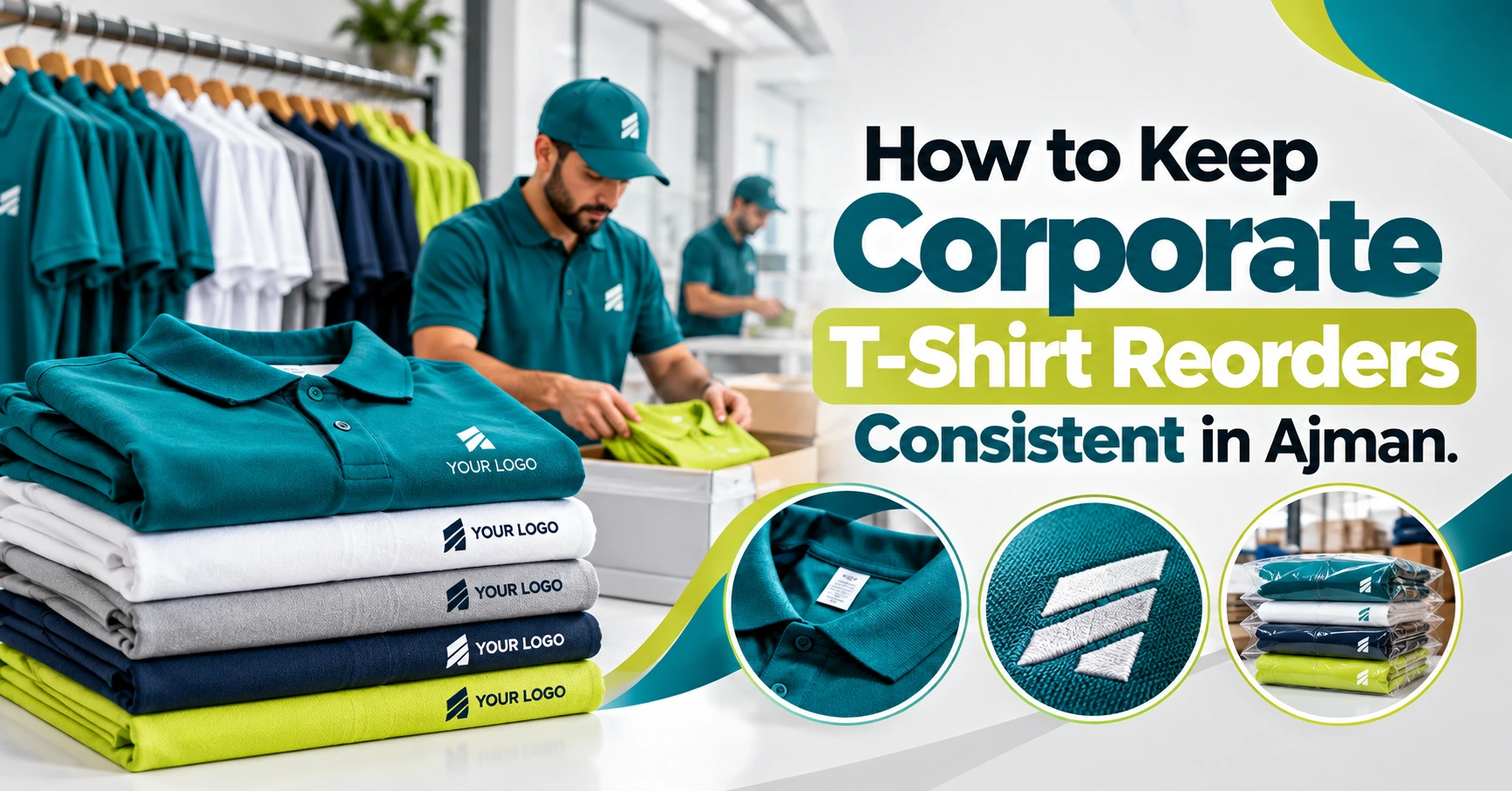
How to Keep Corporate T-Shirt Reorders Consistent in Ajman
For businesses ordering corporate T-shirts , maintaining the same fabric, colour, fit and logo appearance across multiple batches is essential for a consistent company image. Whether you are ordering shirts for new employees, expanding a team, replenishing uniforms or preparing for another corporate event, the next batch should follow the approved specifications of the original order. Working with a supplier experienced in corporate T-shirt printing and manufacturing in Ajman can help simplify this process when the garment details, artwork and production requirements are clearly documented.
However, reordering the same T-shirt does not automatically mean every detail will match perfectly. Fabric availability, colour variations, printing methods, embroidery settings and changes in garment sizing can affect the final result.
The key is to establish a clear reference for the first order and use it to guide every subsequent production run.
This guide explains how businesses in Ajman can manage repeat T-shirt orders, maintain consistent branding and reduce avoidable production issues.
Quick Answer: How Do You Keep Corporate T-Shirt Reorders Consistent?
To maintain consistency across repeat orders, businesses should:
-
Keep an approved reference T-shirt from the original production run.
-
Record the exact garment style, fabric composition and GSM where available.
-
Document garment colour and the approved colour reference.
-
Save the final logo artwork and its print or embroidery specifications.
-
Maintain the same size chart and measurement tolerances.
-
Confirm any material or production changes before manufacturing.
-
Review a sample when the fabric, colour or design changes.
-
Check the finished batch against the approved reference before delivery.
The most important step is to document the approved product rather than relying on the instruction “make it the same as last time.”
Why Do Corporate T-Shirt Reorders Sometimes Look Different?
A business may receive its first order exactly as expected, only to notice differences in the next batch.
These differences do not always result from poor workmanship. They can occur when production details are incomplete, materials change or the new order is treated as a fresh project rather than a repeat of an established design.
Common causes include:
1. Fabric Changes
A supplier may use a different fabric because the original material is unavailable or has been discontinued.
Even fabrics with similar descriptions can differ in thickness, texture, stretch, breathability and appearance.
2. Colour Variations
The same colour name does not necessarily mean an identical shade. Fabric dye lots, material composition and finishing processes can affect how a colour appears.
3. Changes in Sizing
Different garment patterns or measurement specifications can make two shirts labelled “Large” fit differently.
4. Logo Placement Differences
A logo may be printed or embroidered slightly higher, lower, larger or smaller if its exact placement has not been documented.
5. Changes in Printing or Embroidery
Using a different decoration method, ink, transfer material, thread colour or production setting can affect the finished appearance.
6. Artwork Version Errors
An older logo file or revised brand design may accidentally be used for a reorder.
These issues are easier to prevent when all approved details are available before the next batch enters production.
1. Keep an Approved Reference T-Shirt
An approved physical sample is one of the most useful references for repeat corporate apparel orders.
After receiving the first batch, select a representative shirt that matches the agreed specifications. Label it with the product reference, approval date and relevant order details, and store it carefully.
Use this sample to compare later batches for:
-
Fabric feel and thickness.
-
Overall garment shape.
-
Fit and proportions.
-
Colour appearance.
-
Stitching and finishing.
-
Logo size and placement.
-
General workmanship.
A photograph is useful for documenting the original product, but it cannot fully communicate fabric texture, fit or colour appearance.
For that reason, keep the approved physical sample wherever practical.
Practical tip: Do not automatically use the most recently delivered shirt as the new reference. First confirm that the latest batch matches the original approved product.
Otherwise, small changes between batches may gradually become the new standard.
2. Document the Fabric Specification
Fabric selection affects the comfort, appearance and everyday performance of corporate T-shirts.
If the first order used a particular fabric, record its details instead of simply describing it as “cotton T-shirt material.”
Your specification should include the following details wherever they are available.
| Fabric Detail | What to Record |
|---|---|
| Composition | Cotton, polyester or a specified blend |
| Fabric weight | GSM, where applicable |
| Fabric construction | Relevant knit or fabric type |
| Texture | Approved surface feel and appearance |
| Stretch | Whether stretch is required and the expected behaviour |
| Finish | Any specified surface treatment or finishing |
| Colour | Approved shade and reference |
| Supplier reference | Fabric code or material identification, if available |
GSM means grams per square metre and is commonly used to describe fabric weight. It is useful when comparing materials, but it does not independently determine thickness, softness or durability.
When the original fabric is unavailable, the replacement should be assessed rather than accepted purely because its description sounds similar.
For businesses ordering large quantities, it is particularly useful to confirm material substitutions before approving bulk production.
3. Maintain Consistent T-Shirt Colours
Colour consistency is especially important when corporate T-shirts carry a company’s brand colours.
A slight difference may be noticeable when employees from different departments wear shirts from separate production batches together.
To reduce this risk, document both the garment colour and the colours used in the logo.
Record the Garment Colour
Keep the original colour reference, product description and, where possible, an approved physical fabric sample.
For exact brand colours, a defined colour specification can provide a useful starting point. However, the final appearance also depends on the fabric, production process and lighting conditions.
Record Logo Colours Separately
The colour of the printed or embroidered logo may not look exactly the same as the garment colour reference.
For printing, ink and transfer specifications can affect the result. For embroidery, thread selection and the underlying fabric influence the appearance.
Approve Changes Before Production
If the original fabric or colour is no longer available, ask for a new sample or colour approval before committing to the full reorder.
This is particularly important when matching existing employee uniforms.
Remember: A colour name alone is rarely a sufficiently detailed specification for a long-running corporate apparel programme.
4. Use the Same Approved Logo Artwork
Your company logo is one of the most visible features of a corporate T-shirt.
Even when the garment colour and fit are correct, an incorrectly scaled or positioned logo can make the new batch look different.
Maintain a central folder containing the approved artwork and relevant branding instructions.
Include:
-
Final logo file.
-
Artwork version number.
-
Approved logo colours.
-
Print or embroidery method.
-
Logo width and height.
-
Placement on the garment.
-
Distance from fixed garment reference points.
-
Any rules for clear space or proportions.
Use clear filenames, such as CompanyLogo_CorporateTee_Approved_v3, rather than several files named “final,” “final-new” or “final-latest.”
For repeat orders, explicitly identify the approved version.
What If the Company Updates Its Logo?
Do not silently replace the old design during a reorder.
Treat the updated logo as an intentional change. Confirm the new artwork, sizing, colours and placement, then approve the revised sample before production.
That keeps the old and new batches distinguishable and prevents accidental branding inconsistencies.
5. Keep Printing and Embroidery Specifications Consistent
A reorder should follow the approved decoration method unless a change has been discussed and accepted.
Rafal offers different garment decoration options through its garment printing services in Ajman and custom embroidery services.
The suitable method depends on the artwork, garment material, intended use and required appearance.
For Printed Corporate T-Shirts
Record the approved printing method, logo dimensions, position, colours and any relevant production specifications.
Screen printing, direct-to-film (DTF), direct-to-garment (DTG) and heat transfer do not produce identical finishes. Substituting one method for another can change the appearance and feel of the design.
For Embroidered Corporate T-Shirts
Record the thread colours, design dimensions, placement and approved embroidery artwork.
Changes to thread, stitching settings or design digitisation can affect the appearance of the finished logo.
Why This Matters for Reorders
Suppose your first batch used a particular printing method, but the next batch is produced using a different technique.
Even if the same logo file is used, the finish may look or feel different.
That is why decoration specifications should be recorded alongside the garment details, rather than managed separately.
6. Use the Same Size Chart for Every Reorder
One of the most common challenges with corporate apparel is maintaining the same fit across batches.
A company may order shirts for 25 employees in the first batch and 15 additional employees several months later. If a different measurement chart or garment pattern is used, the new shirts may fit differently.
To maintain consistency, keep the approved measurement chart for every size.
Depending on the garment, measurements may include:
-
Chest width.
-
Body length.
-
Shoulder width.
-
Sleeve length.
-
Sleeve opening.
-
Bottom opening.
The exact measurements depend on the style and cut.
Don’t Rely Only on S, M, L and XL
Size labels are helpful, but they are not universal measurements.
Two suppliers can use the same size label while producing garments with different dimensions.
The measurement chart and approved garment sample are more useful references than size names alone.
Account for Measurement Tolerances
Garment manufacturing may involve agreed tolerances, meaning small permitted differences in measurements.
Define the acceptable tolerances with the supplier and use the same criteria for subsequent batches.
If the company changes its preferred fit, document the change explicitly rather than allowing it to happen gradually across reorder cycles.
7. Confirm Changes Before Production Starts
A previous order reference is valuable, but it does not eliminate the need to confirm the current requirements.
Before production begins, ask the supplier to verify that the same garment and decoration specifications are being used.
Changes that should be identified include:
-
Fabric substitutions.
-
Garment colour changes.
-
Updated sizing or fit.
-
Revised logo artwork.
-
Changes in printing or embroidery.
-
Different labels or packaging.
-
Changes to the delivery quantity or size distribution.
If any specification has changed, record it in writing and establish whether a new sample is necessary.
This gives the buyer and manufacturer a shared understanding of what has been approved.
It also reduces the risk of discovering an unexpected change after hundreds of T-shirts have been produced.
8. Approve a New Sample When Necessary
Not every repeat order needs a completely new development process.
If the garment, materials, artwork and production specifications remain unchanged, the original approved references may be sufficient for an efficient reorder process.
However, sample approval becomes more important when something material has changed.
Examples include:
-
The original fabric is unavailable.
-
The garment style has been updated.
-
The logo has been redesigned.
-
A different printing method is proposed.
-
The company wants to change the fit.
-
The product will be used for a different purpose.
A pre-production sample gives buyers an opportunity to review the changes before they affect the entire order.
Compare it with the original reference and check the fabric, fit, colour, dimensions and branding.
Approval should happen before bulk production—not after the full batch has been completed.
9. Plan Reorder Quantities and Sizes Properly
Corporate T-shirt reorders often happen because a business hires new employees, opens another department or needs additional stock for an event.
The new quantity may be smaller than the original order, but the size distribution can be different.
For example, an office may originally order 100 shirts in a range of sizes. Six months later, it may need only 20 shirts, with most of the additional demand concentrated in medium and large sizes.
Before placing a reorder, review:
-
Number of additional employees.
-
Required sizes and quantities.
-
Existing stock.
-
Expected staff changes.
-
Upcoming corporate events.
-
Any garments needed for replacements.
-
Supplier minimum order requirements.
The last point is important because minimum order quantities can vary according to garment type, printing method, fabric availability and production requirements.
Confirm the current minimum quantity and pricing with the supplier rather than assuming that the original order terms still apply.
10. Keep Labels, Packaging and Delivery Details Consistent
Reorder consistency is not limited to the appearance of the T-shirt.
For many businesses, the way garments are labelled, packed and distributed also matters.
A repeat order may need:
-
The same garment labels.
-
Consistent size identification.
-
Approved care labels.
-
Matching packaging.
-
Individual employee or department allocations.
-
Separate cartons for different locations.
-
Clear quantity lists for internal distribution.
These details are particularly useful when a business distributes uniforms across departments, branches or work locations.
For example, if one batch arrives sorted by size and the next arrives mixed together, the garments may still match, but the distribution process becomes less efficient.
Include packaging and delivery instructions in the original order record so they can be reused during future replenishment.
11. Check the Completed Batch Before Delivery
Before the new order is accepted, compare the finished garments against the approved specifications.
A practical inspection should consider:
| Inspection Area | What to Check |
|---|---|
| Fabric | Composition or specified fabric reference |
| Colour | Consistency with the approved reference |
| Fit | Dimensions against the measurement chart |
| Logo | Correct artwork, colour and proportions |
| Placement | Position compared with approved measurements |
| Printing | Finish and appearance |
| Embroidery | Thread colours, stitching and design clarity |
| Stitching | Relevant seams and finishing |
| Quantity | Total pieces and size distribution |
| Packaging | Labels, sorting and packing requirements |
The depth of inspection should reflect the order size and the importance of the garment requirements.
For bulk orders, checking representative garments across sizes can help identify problems before the entire shipment is distributed.
If an issue is discovered, document it and compare it with the agreed specification to determine the appropriate corrective action.
12. Create a Corporate T-Shirt Reorder Record
The easiest way to maintain consistency over time is to keep one master record for each approved corporate T-shirt design.
This record can be a shared document or spreadsheet that the purchasing team and supplier can refer to before every reorder.
Corporate T-Shirt Reorder Checklist
Use the following checklist before submitting your next order.
This gives the supplier a repeatable brief and reduces the need to reconstruct decisions from old emails or invoices.
Corporate T-Shirt Reorder Example
Consider a company in Ajman that initially orders 150 branded T-shirts for its staff.
A few months later, it needs another 40 shirts for new employees.
The original order looked correct, so the purchasing team simply asks for the same design.
However, the supplier now proposes an alternative fabric because the original material is unavailable. The logo file is also taken from an older email, and the new order uses a slightly different size chart.
The result may be a second batch with a different fabric feel, slightly different colour appearance, inconsistent sizing and a logo that does not perfectly match the existing shirts.
Now consider a more controlled approach.
The company provides the approved reference sample, fabric specification, measurement chart, artwork version, logo placement and decoration method. The supplier identifies the fabric substitution before production and submits a sample for review.
The company approves the change before the bulk order begins.
The second approach cannot eliminate every possible variation, but it gives both parties clearer requirements and a better opportunity to catch differences before delivery.
What Should You Send a T-Shirt Manufacturer in Ajman?
When requesting a corporate T-shirt reorder, prepare the information below.
Previous order reference: The original invoice, purchase order or product code.
Approved product: A physical sample or clear product specification.
Quantity: Total number of T-shirts and the quantity required for each size.
Fabric details: Composition, GSM, colour and other agreed specifications.
Branding: Final logo file, approved version, printing or embroidery method and placement.
Required changes: Any updates to the previous design, garment or quantity.
Delivery requirements: Required delivery date and location.
Approval requirements: Whether a sample or pre-production confirmation is needed.
A clear reorder brief allows the manufacturer to identify any missing details before production starts.
For businesses seeking repeat corporate T-shirt manufacturing and printing in Ajman, it is also useful to confirm current material availability, minimum quantities and lead times with the supplier before placing the order.
How Can a Consistent Reorder Process Help Your Business?
A structured reorder process can make corporate apparel purchasing easier to manage.
More Consistent Branding
Using approved artwork, colours and placement helps maintain a coordinated appearance across staff teams.
Fewer Avoidable Errors
Documented specifications reduce ambiguity about what the next batch should include.
Easier Purchasing
A complete product record can make repeat-order enquiries and approvals more straightforward.
Better Stock Planning
Keeping size records and reorder history helps businesses estimate future requirements.
Smoother Distribution
Consistent labels, packaging and size sorting can make it easier to distribute shirts internally.
More Efficient Supplier Communication
Both parties can refer to the same approved information rather than relying on memory or informal descriptions.
These benefits depend on the quality of the specifications, communication and production checks in place. Documentation supports consistency, but it does not replace inspection or clear approval procedures.
Frequently Asked Questions
How can I keep corporate T-shirt reorders consistent?
Keep an approved sample and document the fabric, colour, sizing, artwork, logo placement and decoration method. Share these details with the supplier before every repeat order.
Why do repeat T-shirt orders sometimes have different colours?
Colour variation can result from differences in fabric, dye lots, finishing or printing processes. Maintaining approved references and checking new samples when necessary can help manage these differences.
Should I keep a sample of the original corporate T-shirt?
Yes. An approved physical sample provides a practical reference for fabric feel, fit, colour, logo placement and overall appearance.
How do I make sure the logo looks the same on every batch?
Use the same approved artwork version and document the logo dimensions, colours, placement and printing or embroidery method. Confirm any proposed changes before production.
Can I reorder the same T-shirt without approving another sample?
Sometimes. If the approved product and production specifications remain unchanged, a new sample may not be necessary. If the fabric, colour, fit, artwork or decoration method changes, a new sample is worth considering.
How can I maintain consistent T-shirt sizes for new employees?
Keep the approved measurement chart and agreed tolerances, rather than relying only on labels such as S, M, L or XL. Check that the same garment pattern and sizing specification are used for the new batch.
Should I change the printing method during a reorder?
Only after reviewing the implications. A different printing method can change the logo’s appearance, texture and finish. Confirm the alternative against the garment and branding requirements before approving it.
What should I ask a corporate T-shirt supplier in Ajman before reordering?
Ask whether the original fabric, garment style, colours, artwork and decoration method are still available. Confirm minimum quantities, current pricing, lead time, sample requirements and delivery arrangements.
Final Takeaway
Keeping corporate T-shirt reorders consistent in Ajman starts with a simple principle: record what was approved, confirm what is changing and inspect what is produced.
A previous invoice or product name is not always enough to reproduce an order accurately. Buyers should maintain a clear reference for the garment, fabric, colour, measurements, branding and finishing details.
Before your next reorder, make sure you have:
Approved Sample + Fabric Specification + Colour Reference + Logo Artwork + Size Chart + Production Approval
For businesses ordering staff apparel, promotional garments or branded T-shirts regularly, this approach can make future orders easier to coordinate and help maintain a more consistent company image.
If you are planning a new order or replenishing existing corporate apparel, explore Rafal Garments Company LLC’s T-shirt printing and manufacturing services in Ajman to discuss your garment specifications, branding requirements and reorder quantities.