Monogram Embroidery vs Logo Embroidery: Which Is Right for Apparel & Gifts?
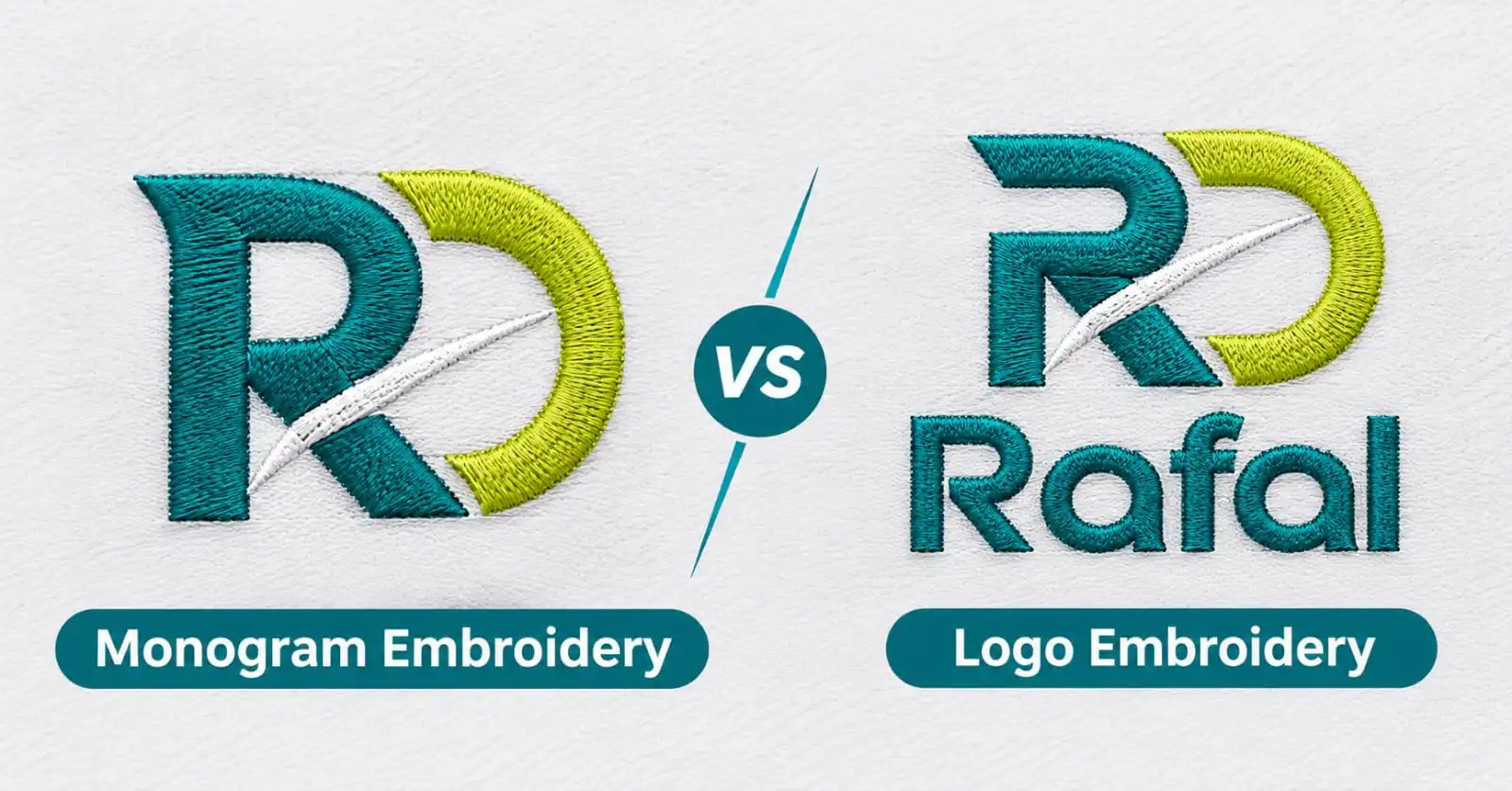
When choosing custom embroidery services for apparel, uniforms or personalised gifts, one important decision is whether to use monogram embroidery or logo embroidery. Both techniques use stitched designs to customise fabric, but they serve different purposes. Monogram embroidery typically focuses on individual initials or personalised lettering, while logo embroidery reproduces a brand’s visual identity on clothing, accessories and promotional products.
The right option depends on what you want the finished item to communicate. A personalised monogram can make a shirt, towel or gift feel more individual, while an embroidered company logo can help maintain a consistent identity across employee uniforms and branded merchandise.
Understanding the differences in design, placement, size, fabric compatibility and intended use can help you choose the right embroidery style before placing an order.
Quick Answer: What Is the Difference Between Monogram and Logo Embroidery?
Monogram embroidery uses initials, names or specially arranged letters to personalise an item. It is commonly selected for individual apparel, towels, bags, accessories and personalised gifts.
Logo embroidery reproduces a company’s, organisation’s or team’s visual identity using stitched artwork. It is commonly used on uniforms, polo shirts, jackets, caps, workwear and corporate gifts.
| Comparison | Monogram Embroidery | Logo Embroidery |
|---|---|---|
| Main purpose | Personalisation | Branding and identification |
| Design | Initials, names or letter combinations | Brand symbols, text or complete logo artwork |
| Customisation | Often customised for each recipient | Usually consistent across multiple items |
| Common placement | Shirt cuffs, chest, collars, towels and bags | Left chest, sleeves, caps, jackets and uniforms |
| Typical use | Personal apparel and gifts | Corporate clothing and promotional merchandise |
| Design requirements | Legible lettering and suitable fonts | Accurate logo artwork and embroidery digitisation |
The simplest way to decide: Choose monogram embroidery when the priority is personalisation. Choose logo embroidery when the priority is consistent branding.
What Is Monogram Embroidery?
Monogram embroidery is the process of stitching initials, names or arranged letters onto fabric to create a personalised design.
It is often selected for gifts, individual clothing items and accessories where the recipient’s identity or initials are part of the design.
Unlike a standard company logo that is repeated across a batch, monogram embroidery can be customised for different individuals.
For example, a business may order embroidered staff shirts with each employee’s initials, while a gift order may include a person’s initials on a towel or bag.
Common Monogram Embroidery Styles
Monograms can be designed in different lettering styles depending on the intended appearance.
1. Classic Letter Monograms
Two or three initials can be arranged in a traditional format, sometimes with one letter larger than the others.
2. Block Letter Monograms
These use clean, structured lettering. They are often suitable for designs where readability is important.
3. Script Monograms
Script fonts create a flowing, decorative appearance. They can work well for selected gifts, robes and personalised apparel, provided the lettering remains legible at the chosen size.
4. Combined Initial Designs
Two or more letters can be arranged or interwoven into a single design.
Where Is Monogram Embroidery Commonly Used?
Monogramming can be used on:
-
Personalised shirts and polo shirts.
-
Bath towels and hand towels.
-
Bathrobes.
-
Tote bags and backpacks.
-
Caps and accessories.
-
Jackets and selected apparel.
-
Personalised gifts.
-
Special occasion gift sets.
The final design should be selected according to the fabric, available embroidery area and readability requirements.
What Is Logo Embroidery?
Logo embroidery is the process of reproducing a company’s or organisation’s visual identity using stitched thread on a garment or fabric product.
The design may contain a symbol, lettering, a combination of both or a simplified version of a brand identity.
It is widely used by businesses that want consistent branding across employee clothing, uniforms and promotional merchandise.
For example, a restaurant may use logo embroidery on chef jackets, while a corporate office may place its logo on employee polo shirts.
Common Applications of Logo Embroidery
Logo embroidery is suitable for several types of business and promotional products, including:
Corporate Uniforms: Company logos on shirts, polo shirts and jackets.
Hospitality Apparel: Embroidered branding on restaurant, hotel and catering uniforms.
Workwear: Company identification on selected industrial and service garments.
Sportswear: Team logos on jerseys, tracksuits and caps.
Promotional Merchandise: Branded caps, bags and other suitable fabric products.
Corporate Gifts: Company branding on selected personalised or promotional items.
For businesses, the main objective is to reproduce the approved logo consistently across different garments and production batches.
Monogram Embroidery vs Logo Embroidery: Key Differences Explained
Although both techniques use embroidery machines and thread, their design requirements can be quite different.
Let’s look at the main differences.
1. Design and Artwork
Monogram embroidery generally involves lettering, initials or short names.
The design may be created using an embroidery font or a customised arrangement of letters.
Logo embroidery usually begins with existing brand artwork. That artwork may need to be converted into an embroidery-ready file through a process called digitisation.
Logos with small text, fine outlines, gradients or intricate details may need simplification to reproduce clearly with thread.
Which should you choose?
For a simple personalised design, monogram embroidery may be more suitable. For a recognisable company identity, logo embroidery is generally the appropriate option.
2. Personalisation vs Brand Recognition
This is the most important difference between the two.
Monogram embroidery focuses on the individual item or recipient.
Logo embroidery focuses on a shared design that represents a company, organisation, team or brand.
Consider these examples:
-
A personalised towel with someone’s initials uses monogram embroidery.
-
A company polo shirt with its brand symbol uses logo embroidery.
-
An employee shirt with an individual’s name and company logo may use both.
In some projects, combining monograms and logos creates a practical solution for personalised corporate clothing.
3. Embroidery Placement
Placement influences how the finished design looks and how easily it can be seen.
Popular Monogram Placements:
-
Shirt cuffs.
-
Chest areas.
-
Collar points.
-
Towel corners.
-
Robe pockets.
-
Bag panels.
Popular Logo Placements:
-
Left chest.
-
Right chest.
-
Shirt sleeves.
-
Jacket fronts.
-
Caps.
-
Uniform pockets.
-
Selected back panels.
The available embroidery area should be checked before approving the design.
4. Design Size and Detail
Monogram designs are often relatively small and rely on clear lettering.
Logo designs can vary significantly in size and complexity.
A detailed company logo may require careful adjustment to stitch density, lettering size, thread selection and design layout.
Very small text or complicated elements can lose clarity when reproduced in thread.
For this reason, a logo that looks excellent on a computer screen may need modification before embroidery.
5. Fabric Compatibility
Fabric choice affects both monogram and logo embroidery.
Different fabrics have different thicknesses, stretch characteristics and surface textures.
For example:
| Fabric or Material | What to Consider |
|---|---|
| Cotton | Suitable stabilisation and fabric support |
| Polyester | Fabric construction and thread performance |
| Cotton-polyester blends | Stretch and surface characteristics |
| Terry fabric | Pile height and design clarity |
| Denim | Fabric thickness and needle suitability |
| Knitted fabrics | Stretch and stabilisation requirements |
The same embroidery settings should not automatically be used for every material.
A suitable design and production approach should be selected according to the fabric and finished product.
6. Production Requirements
Monogram embroidery and logo embroidery can also differ in how orders are prepared.
A company ordering 100 identical uniforms may use one approved logo file across the entire batch.
A personalised gift order involving 50 different names or initials requires individual design information for each item.
Before production, confirm:
-
Artwork or initials.
-
Font and lettering style.
-
Thread colours.
-
Embroidery dimensions.
-
Placement.
-
Fabric type.
-
Number of pieces.
-
Personalisation details, where applicable.
Clear instructions help avoid errors when processing multiple items.
Can You Combine Monogram and Logo Embroidery on One Garment?
Yes. Combining both techniques can work particularly well for personalised corporate clothing and gifts.
For example, a business could have:
-
Its company logo on the left chest.
-
The employee’s name or initials on the opposite side.
This creates a garment that supports both company identification and individual recognition.
Other applications include:
Hotel Staff Uniforms: Company or hotel branding with individual employee names.
Corporate Gifts: Business logos combined with recipient initials.
Team Apparel: Team logos with individual player names or initials.
Personalised Workwear: Company identification combined with employee details.
The key is to maintain enough space between design elements so that the garment does not appear overcrowded.
Which Is Better for Corporate Apparel?
For most corporate apparel programmes, logo embroidery is the primary choice when the objective is consistent company branding.
It allows the same approved design to be used across:
-
Employee shirts.
-
Polo shirts.
-
Jackets.
-
Hospitality uniforms.
-
Workwear.
-
Caps.
-
Promotional garments.
Monogram embroidery can be added when individual identification is also needed.
For example, a company ordering uniforms for 30 employees may choose:
-
Company logo embroidery for all 30 shirts.
-
Individual name embroidery where required.
Businesses can also use monogram embroidery for management apparel, special uniforms or personalised corporate gifts.
The selection depends on the organisation’s branding requirements and how the garments will be used.
Which Is Better for Personalised Gifts?
Monogram embroidery is often the more suitable option when a gift is intended for a specific recipient.
Initials or names can make an otherwise standard product more personal without changing the entire design.
Common examples include:
Wedding and Occasion Gifts
Personalised towels, robes, bags and selected fabric accessories.
Employee Appreciation Gifts
Personalised apparel and accessories featuring individual initials.
Client Gifts
Corporate gifts featuring the recipient’s initials or a combination of personalisation and company branding.
Hospitality Gifts
Personalised towels, robes and other fabric products for selected guest or promotional packages.
Logo embroidery is also appropriate for gifts when the main objective is to feature the company’s identity rather than personalise each item.
Monogram Embroidery vs Logo Embroidery: What About Cost?
The cost of either embroidery option depends on more than whether the design contains initials or a logo.
Important factors include:
-
Design dimensions.
-
Stitch count.
-
Artwork complexity.
-
Number of thread colours.
-
Digitisation requirements.
-
Garment or product type.
-
Fabric thickness.
-
Total quantity.
-
Number of individual personalised designs.
Monogram Embroidery
Simple initial designs may require less artwork preparation than a complex custom logo. However, individually changing initials across a large order can add production and handling work.
Logo Embroidery
A company logo may require initial digitisation and sample approval. Once the artwork is approved, the same design file can generally be used for subsequent garments, subject to the garment and production specifications.
The best way to compare quotations is to provide the same garment, embroidery size, artwork requirements and quantity to each supplier.
How to Prepare Artwork for Monogram and Logo Embroidery
Artwork preparation plays an important role in the final result.
For Monogram Embroidery
Provide:
-
Correct initials or name.
-
Preferred font.
-
Letter arrangement.
-
Thread colour.
-
Embroidery size.
-
Placement.
-
Garment or gift material.
For personalised orders, double-check the spelling and letter order before production.
For Logo Embroidery
Provide:
-
Approved company logo.
-
High-resolution or vector artwork, where available.
-
Brand colour references.
-
Required embroidery dimensions.
-
Preferred placement.
-
Garment details.
-
Any specific branding instructions.
The artwork may need to be digitised into a machine-readable embroidery format.
This process determines how the design is translated into stitches.
A sample or design approval can be useful when the logo contains small details or when the order involves multiple garment types.
What Should You Check Before Ordering Custom Embroidery in Ajman?
Whether you choose monogram or logo embroidery, a few checks can help make the ordering process clearer.
1. Confirm the Purpose
Decide whether the design is intended for personalisation, corporate branding or both.
2. Select the Right Product
Choose the garment or gift item according to its intended use.
3. Check Fabric Suitability
Make sure the material can support the intended embroidery design.
4. Finalise the Artwork
Approve the initials, logo, lettering style, colours and design dimensions.
5. Confirm Placement
Specify exactly where the embroidery should appear.
6. Review a Sample When Needed
For larger orders or complex artwork, a sample helps confirm the design’s appearance before bulk production.
7. Check Quantity and Delivery Requirements
Confirm the number of items, personalisation details and expected production schedule.
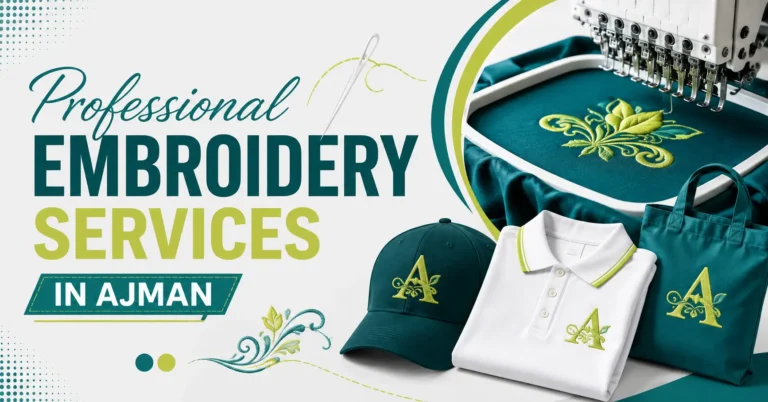
For businesses in Ajman looking for custom embroidery services, Rafal Garments Company LLC provides monogramming, logo embroidery and embroidery options for uniforms, apparel and promotional or corporate gifts.
How Does Rafal Garments Support Monogram and Logo Embroidery?
Rafal Garments Company LLC offers embroidery services for businesses and individual apparel requirements in Ajman.
Its embroidery service covers different applications, including:
Custom Logo Embroidery: For corporate clothing, uniforms and promotional merchandise.
Monogramming: Personalised initials and lettering on selected shirts, towels, bags and other products.
Uniform Embroidery: Branding and individual names or titles for workplace clothing.
Corporate and Promotional Gifts: Embroidered designs on suitable fabric-based gifts and accessories.
Sportswear and Team Uniforms: Embroidered designs for jerseys, jackets, caps and team apparel.
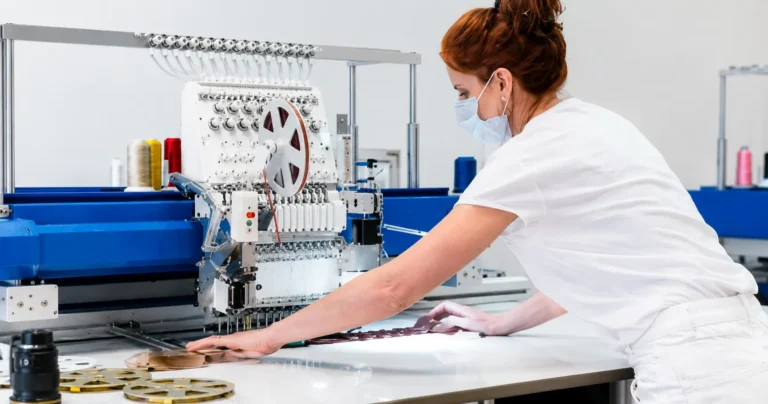
The embroidery process includes artwork evaluation, digitisation, thread and fabric selection, production and quality checks.
Businesses can share their logo, garment preferences, required quantities and placement details to discuss a suitable embroidery arrangement.
Common Mistakes to Avoid When Choosing Embroidery
Using a Complicated Logo at a Very Small Size
Fine lettering and intricate details may not reproduce clearly when stitched into a small area.
Choosing a Decorative Font Without Checking Readability
Some script fonts look attractive on screen but become difficult to read when embroidered at a smaller size.
Ignoring Fabric Characteristics
The design and production settings should suit the selected garment material.
Placing Too Many Designs on One Garment
Combining a company logo, initials, names and additional decorative elements can make the garment look overcrowded.
Providing Incorrect Initials or Names
Personalised orders require careful verification of spelling and letter sequence before production.
Skipping Sample Approval for Complex Orders
A sample can help identify design or placement issues before bulk production begins.
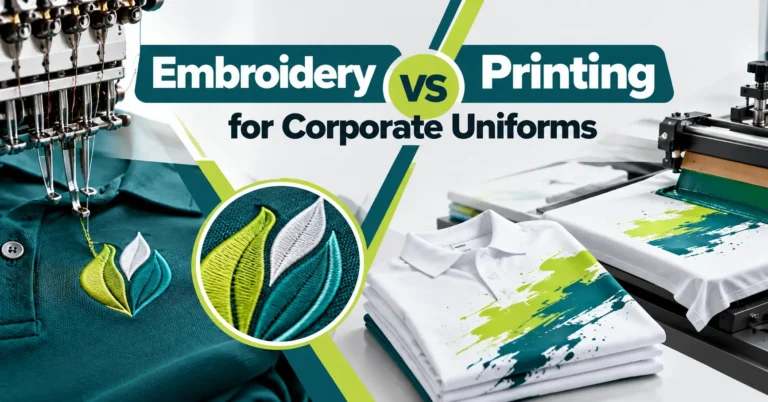
Assuming Printing and Embroidery Produce the Same Finish
Printing transfers a visual design onto the material, while embroidery creates the design using stitches. They have different appearance, texture and production considerations.
Final Takeaway: Monogram Embroidery or Logo Embroidery?
The choice between monogram embroidery and logo embroidery depends on the purpose of the garment or gift.
Choose monogram embroidery when:
-
You want to personalise an item with initials or names.
-
You are preparing individual gifts.
-
You want a personalised detail on shirts, towels or bags.
-
Each item needs different lettering.
Choose logo embroidery when:
-
You want to display a company or organisation’s identity.
-
You are ordering corporate uniforms.
-
You need consistent branding across a team.
-
You are preparing branded promotional merchandise.
You can also combine both approaches when a garment needs company branding and individual identification.
The most suitable option is the one that matches the design, fabric, placement and intended use of the finished product.
For businesses and customers exploring custom embroidery in Ajman, Rafal Garments Company LLC offers monogramming and logo embroidery options for apparel, uniforms and gifts.
Frequently Asked Questions
What is the main difference between monogram embroidery and logo embroidery?
Monogram embroidery usually uses initials or names to personalise an item, while logo embroidery reproduces a company, organisation or team’s visual identity on apparel and accessories.
Is monogram embroidery suitable for corporate gifts?
Yes. Initials or personalised lettering can be added to suitable gifts such as towels, bags, shirts and other fabric products.
Can a company logo be embroidered on polo shirts?
Yes. Polo shirts are commonly used for logo embroidery, particularly for corporate uniforms, hospitality apparel and promotional clothing. Fabric suitability and logo size should be checked before production.
Can I have my name and company logo embroidered on the same shirt?
Yes. A company logo and individual name can be placed on different areas of the garment, subject to available space and design requirements.
Which embroidery is better for personalised gifts?
Monogram embroidery is often suitable when gifts are intended for individual recipients. Logo embroidery is more appropriate when the objective is company branding or promotional presentation.
Is logo embroidery more expensive than monogram embroidery?
Not necessarily. Pricing depends on stitch count, artwork complexity, dimensions, thread colours, digitisation, order quantity and the number of individual designs.
Can monogram embroidery be done on towels and bags?
Yes. Monogramming can be used on suitable towels, bags, robes, shirts and other fabric products. The material and surface construction should be assessed before production.
What artwork format is required for logo embroidery?
High-resolution or vector artwork can help with design preparation. The embroidery provider typically converts the approved design into a machine-readable embroidery file through digitisation.
Can complex logos be embroidered?
Many complex logos can be adapted for embroidery, but very fine details, gradients and tiny lettering may need simplification to maintain clarity.
Where can I get custom monogram and logo embroidery in Ajman?
Rafal Garments Company LLC offers custom embroidery services in Ajman, including logo embroidery, monogramming, uniform embroidery and promotional gift embroidery.